

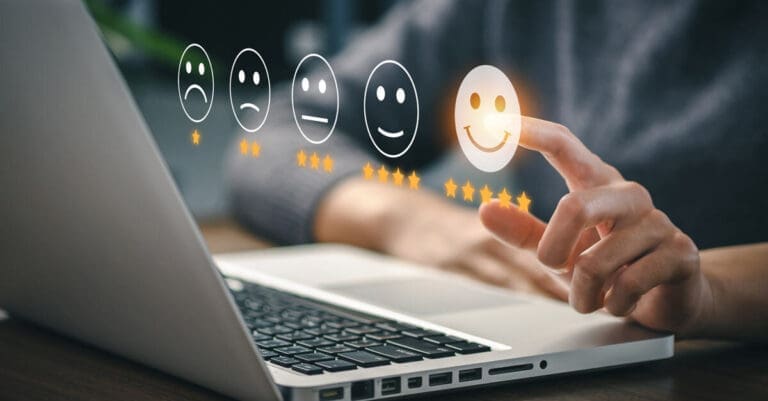
In an era of hyper-adoption and even faster abandonment, retaining customers requires more than just meeting needs—it demands anticipating them.
You no longer have the luxury of a ‘second chance’: recent data reveals that nearly 60% of consumers will abandon a brand they love after just one bad experience, and 70% will walk away forever after two. The patience for friction has evaporated; today’s customers equate ‘slow’ with ‘broken.’
To protect your revenue and secure loyalty in this ruthless landscape, you must do more than just show up—you must aggressively close the Experience Gap.
Things to know about experience gaps:
What is the experience gap?
The experience gap is the gap between the experience customers desire and expect from a brand and what the organization actually delivers. It occurs when a brand falls short of a customer’s expectations at any point in their user journey.
What Causes Experience Gaps?
Experience gaps stem from simply not gaining insight directly from your customers as they experience your digital product. Specific factors that cause experience gaps are:
Lack of expertise as an experience gap cause
Experience gaps often occur when your product designers lack the fundamental understanding of customer experience design principles.
The best products are created by individuals who are skilled in best-of-breed user experience techniques, understand the user flow of a digital technology, and know how to make an experience more targeted, more focused, and more connected to what the user actually wants.
If you do not have UX designers and product designers who are deeply familiar with best practices in UX, user flow, design, and development, your team will be challenged to build an experience that seamlessly meets your customers’ expectations.
Using the wrong technology as an experience gap cause
Experience gaps frequently widen when your technology stack is too rigid to keep pace with the speed of your customers. Now, the question isn’t just “App vs. Website”—it’s whether your architecture is composable enough to serve both instantly.
Modern users judge performance by Core Web Vitals: they expect pages to load in under 2 seconds and interfaces to react instantly to every tap. If your site feels sluggish (high Interaction to Next Paint), users assume your brand is broken. Furthermore, customers now expect AI-driven assistance—smart agents that can predict their next step, fill in forms automatically, or surface the exact product they need without them searching for it.
To close this gap, you must modernize your stack (e.g., Headless CMS, Edge Computing) to ensure that every digital interaction is not just functional, but instantaneous and predictive.
If there is high latency between your customer’s interaction with your product and the resultant product response, they will be frustrated and end their customer journey.
Misunderstanding your customers as an experience gap cause
An experience gap occurs when you fall short of your customers’ expectations for their user experience. This can easily happen when you don’t take the time to understand your customers.
To avoid any experience gaps, your team needs to conduct user research to determine your customers’ goals and desires, their needs and unmet needs. You can gather this information from a variety of sources:
- Talk to prospective customers: What are their needs? What would the ideal product experience be?
- Talk to customers who didn’t complete their user journey or transaction: Why did they drop off? What would they change about the brand, product, or experience?
- Talk to customers who were loyal customers but have now left the brand: Why did they leave? What kind of experience would have kept them engaged and loyal?
- Talk to happy customers: What did they like about their experience? What was especially delightful? What was unique that they loved?
Gaining a full understanding of your users will empower you with the knowledge of whether the experience you are delivering will meet their goals, needs, and expectations.
Ignoring Real-Time Signals (The “Silent” Feedback)
ou cannot fix an experience gap if you only look at feedback after the customer has left. Traditional feedback loops (surveys, complaint forms) are too slow for the modern economy. By the time a customer fills out a negative review, you’ve already lost them.
To close this gap, you need Real-Time Sentiment Analysis.
- Listen in the Moment: Use AI tools to detect frustration signals—like “rage clicks,” rapid scrolling, or negative sentiment in chat logs—while the user is still active.
- Automate Intervention: If a high-value customer is struggling, your system should automatically trigger a “Can I help?” prompt or route them to a priority human agent immediately.
- Close the Loop Instantly: Don’t just collect data; act on it. If a user reports a bug or a confusing UI element, feed that directly into your product backlog.
Feedback isn’t a scorecard anymore; it’s a live pulse. Monitor it to save relationships before they break.
How to Close the Experience Gap
There are several ways to close experience gaps, including engaging with technical experts, channeling effective feedback loops, conducting user research, mapping out customer journeys and performing competitive research.
- Engage with technical experts: Make sure you have the right people on your team who are deeply knowledgeable in design and experience best practices, as well as best-of-breed technologies. It takes skilled experts to identify the right technologies, flows, and strategies to develop and refine your product to create an exceptional user experience.
- Channel effective feedback loops: Allowing your users the opportunity to give feedback at every touchpoint will give you valuable insights to identify weaknesses and adapt accordingly.
- Conduct user research: Asking what your users truly want and expect from their experience enables you to strategically craft the experience to meet (and exceed) those expectations. It also ensures you don’t invest your time, effort, and money developing a digital product that misses the mark.
- Map out customer journeys: Map out the anticipated journey that begins before customers even touch the product and ends after they are done using it. Identify the experience and emotions associated with each step of the user’s journey and pinpoint weaknesses.
- Perform competitive research: Learn how your brand’s competition interacts with their users to inform your own user experience. Identifying clear gaps where the competition is underperforming can also serve as an opportunity to differentiate your product experience.
How AIM Consulting Can Help You Close the Experience Gap
When your organization looks to bring its big ideas to life, it helps to turn to experts.
At AIM Consulting, our unique capabilities in product design, digital strategy, software engineering, data analytics, and agile delivery enable your company to tap into a distinctive set of capabilities that will deliver you a strong digital product with a delightful user experience – not just another app.
You Have Big Ideas, We Have Innovative Solutions
Delivering a user experience that delights your customers requires not only a clear strategy, with planning, design, development, and testing – but a combination of power and craft.