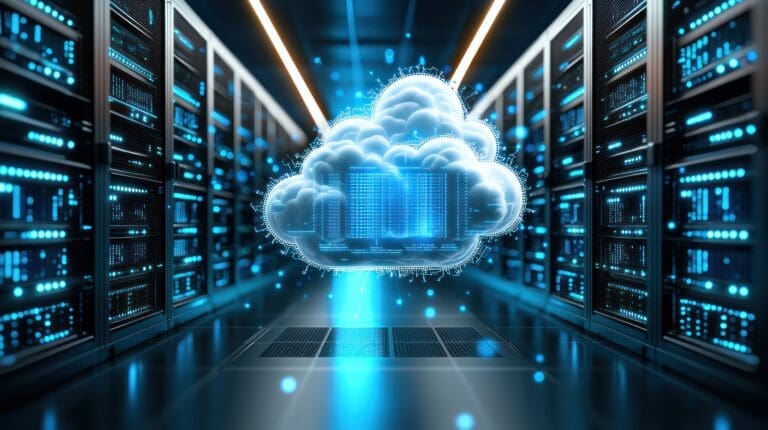

In the decade since the term “digital transformation” became a corporate staple, the landscape of enterprise technology has shifted from merely “complex” to “hyper-interdependent.” Today, the challenge isn’t just installing an enterprise system; it’s orchestrating a symphony of AI-driven microservices, cloud-native architectures, and real-time data pipelines that must work in perfect harmony.
To navigate this volatility, organizations have turned to a specialized role: the Technical Program Manager (TPM). No longer just a “project coordinator,” the modern TPM is a strategic architect of execution, bridging the gap between high-level business vision and deep-system engineering.
The Evolution: From SOA to AI-Native Ecosystems
While Service Oriented Architecture (SOA) paved the way, today’s enterprises operate in a world of serverless computing, edge intelligence, and LLM integrations. When technical requirements are scattered across dozens of autonomous squads, divisions, and external partners, a standard project manager often hits a wall.
TPMs thrive in this friction. They provide the connective tissue for projects where:
- Dependencies are non-linear: Changes in a core API ripple through hundreds of downstream consumers.
- Innovation is a requirement: The path to the solution isn’t documented; it has to be engineered.
- Speed must meet Security: “Shift Left” compliance and FinOps (cloud cost optimization) must be baked into the delivery lifecycle.
The TPM 2.0 Skillset
A superb TPM combines the technical grit of a Senior Architect with the strategic influence of a Business Director. We categorize these essential traits into three pillars:
| Pillar | Focus Areas | Why it Matters in 2026 |
| Architectural Depth | Distributed Systems, AI/ML Pipelines, Cybersecurity | Enables high-level design reviews and the ability to challenge technical trade-offs. |
| Strategic Leadership | Influence without Authority, Value Mapping, Change Mgmt | Ensures that engineering output is directly tied to Business ROI and customer value. |
| Modern Tooling | AI-driven Capacity Planning, CI/CD, Chaos Engineering | Moves beyond static Gantt charts to manage dynamic, resilient delivery workflows. |
Where TPMs Make the Greatest Impact
Every organization faces “wicked problems”—challenges so complex that the solution isn’t immediately visible. TPMs are the specialists called in to lead:
- Cloud-Native Migrations: Moving from legacy infrastructure to elastic, multi-cloud environments.
- AI Integration: Managing the lifecycle of machine learning models from data ingestion to production.
- Complex Refactoring: Modernizing core systems without disrupting the “live” customer experience.
- Cross-Functional Product Launches: Aligning engineering, product, legal, and marketing for global rollouts.
The TPM Difference: While a traditional Project Manager tracks the health of a project (Scope, Schedule, Budget), a TPM actively shapes the architecture of the solution. They don’t just identify a risk; they dive into the code and system design with engineers to mitigate it.
Real-World Strategic Delivery
Case Study: Resilient Incident Response
At a multi-billion dollar global travel firm, an AIM Consulting TPM addressed systemic service application failures. By implementing a continuous improvement model and modernizing the telemetry (logging/alerts) across 10 distinct teams, the TPM didn’t just fix a bug—they built a culture of observability that reduced downtime by 40%.
Case Study: Fraud-Proof Inventory Platforms
For a global logistics leader, an AIM TPM architected a first-of-its-kind virtual inventory platform. The challenge was enabling global access while isolating fraud in real-time. By designing an event-driven system that could “lock out” malicious suppliers without affecting legitimate users, the TPM transformed a bottleneck into a competitive advantage.
Elevate Your Delivery with AIM Consulting
Technical Program Management is at the heart of our Transformation & Enterprise Delivery practice. We don’t just provide “resource management”; we provide technical partners who understand the intricacies of your stack and the nuances of your business.
Whether you are navigating an AI transition, a cloud migration, or a complex system integration, our TPMs are the “doers” who lead and the “leaders” who do.
Tell us about your technical challenge and discover how a TPM can act as a force multiplier for your engineering organization.
Insights By